503 11 55 44



How to choose the ideal radiator valves? A practical guide for every bathroom
Choosing the right radiator valves is key to the efficiency of your heating system and the aesthetics of your bathroom. Radiator valves play an important role in regulating temperature and heat flow, which affects both comfort and energy efficiency. Besides their function, these valves can also affect the look of the interior, becoming an integral decorative element.
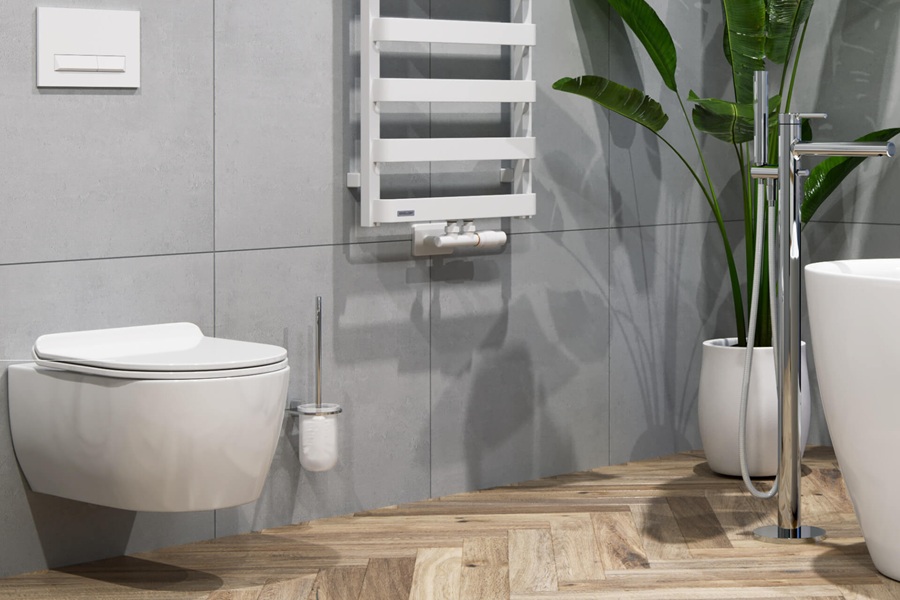
In this article, we'll present the different types of radiator valves, their applications and the criteria worth considering when choosing them. Whether you're planning to modernise your heating system or fitting out a new bathroom, you'll find practical tips here to help you make the right decision.
📌 Table of contents:
- 1. What are radiator valves and why do they matter?
- 2. Types of radiator valves and their applications
- 3. How to choose the right valves for your radiator?
- 4. Installing radiator valves – practical tips
- 5. Why choose radiator valves from Excellent's range?
📝 Summary:
- Thermostatic valves automatically regulate the flow of hot water depending on the room temperature — energy savings, comfort and precise control.
- Manual valves are simple to use, ideal for smaller bathrooms or where automatic regulation isn't needed.
- The choice between angled and straight valves depends on the type of radiator connection (side or bottom). Spacing and compatibility with the system, e.g. central heating, also matter.
- Valves should suit the character of the bathroom – chrome thermostatic valves work well in modern interiors, while angled, traditional models suit retro-style bathrooms.
What are radiator valves and why do they matter?
Functions of radiator valves
Radiator valves play a key role in the heating system, providing control over water flow and temperature regulation in individual radiators. They let you manage the heat in your home precisely, which translates into comfort and energy efficiency.
-
Water flow control: Radiator valves let you regulate the amount of water flowing through the radiator. This allows you to control how much heat is delivered to a given room. Reducing the water flow through the valve means the radiator gives off less heat, which is useful, for example, in rooms that don't need intensive heating.
-
Temperature regulation: Thermostatic valves, one of the most popular types of radiator valve, automatically adjust the water flow to maintain the set room temperature. Thanks to temperature sensors, these valves open or close depending on the current air temperature, ensuring constant thermal comfort while reducing energy consumption.
-
Energy savings: Well-chosen and properly set radiator valves can significantly reduce heating costs. By precisely regulating the heat delivered to individual rooms, you avoid unnecessary overheating, which leads to savings in both energy and money.
Types of radiator valves
Several types of radiator valves are available on the market, each with its own specific applications and benefits. Here's a brief overview of the main types:
-
Thermostatic valves: These valves are fitted with a thermostatic head that automatically regulates water flow depending on the room temperature. They're ideal for precise temperature management, making them a popular choice in modern heating systems.
-
Manual valves: Manual valves are a simpler solution, allowing you to control the water flow through the radiator by hand. They're easy to use and work perfectly in places where automatic temperature regulation isn't necessary.
-
Angled and straight valves: The difference between them lies in how they're installed. Angled valves are fitted at an angle, which is useful for a side radiator connection. Straight valves are fitted perpendicular to the radiator, which suits installations with a bottom connection.
Each of these valves has its own specific applications and can be the optimal choice depending on the configuration of your heating installation and your preferences. Later in the article we'll discuss these types in more detail to help you choose the best solution for your bathroom.
Types of radiator valves and their applications
Thermostatic valves
Thermostatic valves are advanced devices that enable automatic management of the water flow through a radiator, depending on the room temperature. They work using a sensor that measures the ambient temperature. When the temperature drops below the set level, the valve opens, allowing a greater flow of hot water and thus heating the room. When the temperature reaches the desired level, the valve automatically closes or reduces the flow to maintain a stable temperature.
Advantages:
Thermostatic valves offer several key benefits:
-
Energy savings: Thanks to automatic regulation, these valves allow for efficient energy use, which translates into lower heating bills. Automatically adjusting the water flow to current needs limits wasted heat.
-
Comfort of use: Thermostatic valves maintain a constant, comfortable room temperature without the need for manual adjustment. This is especially convenient in bathrooms, where thermal comfort is key.
-
Precise control: They allow precise temperature management in individual rooms, which is particularly important in homes with multiple radiators, where different rooms may require different heating levels.
Manual valves
Manual valves are simpler devices that let the user control the water flow through the radiator by hand. Regulation is done by turning a knob, which opens or closes the water flow, increasing or decreasing the heat delivered by the radiator. These valves don't have an automatic regulation function, meaning the user has to adjust the settings themselves as needed.
Application:
Manual valves are an ideal choice in situations where precise temperature control isn't required, or in places where simplicity of use is a priority. They can be especially useful in:
-
Smaller bathrooms: Where the need for temperature regulation is less demanding, and ease of use is more desirable.
-
Rooms that rarely need a temperature change: For example, guest bathrooms or rooms used occasionally, where frequent heat regulation isn't needed.
Angled and straight valves
Radiator valves are available in two basic configurations – angled and straight – which differ in how they're installed and what they're used for.
-
Angled valves: These valves are fitted at an angle (usually 90 degrees) relative to the pipe supplying water to the radiator. They're ideal for situations where the pipes come out of the wall and require a side connection to the radiator.
-
Straight valves: These valves are fitted in a straight line, without bends, meaning they're best for installations where the pipes run in a straight line to the radiator, usually from below.
Examples of use:
Angled valves: They work perfectly for side-mounted radiators, for example when the hot water supply pipes come out of the wall. They're often chosen in older buildings or where the layout of the installation doesn't allow for other solutions.
Straight valves: These are the best choice for modern installations with a bottom radiator connection, where the pipes run in a straight line from the floor to the radiator. This solution looks neat and is often used in modern interiors.
Each of these valve types has its own specific applications, which can be tailored to individual needs and the layout of the heating installation. Choosing the right valve is key to ensuring the heating system works effectively and to thermal comfort in your bathroom.
Check out radiator valves
See nowHow to choose the right valves for your radiator?
Choosing the right radiator valves is key to ensuring the heating system works efficiently and to thermal comfort in the bathroom. Here are the steps that will help you choose the best solution.
Steps to choosing
First of all, identify the type of heating installation in your bathroom. Is it a central heating system, or perhaps an independent heating system? For central systems, thermostatic valves, which automatically regulate the temperature, will usually be the best choice. For simpler installations, especially in smaller bathrooms, manual valves may be sufficient.
Check the type of radiator:
Check what type of radiator you have. Radiators can have different types of connections – side or bottom. This will determine whether you need angled or straight valves. Angled valves are used for side connections, while straight valves are used for bottom ones.
Decide on your temperature regulation preferences:
Think about how precisely you want to control the temperature. If you care about automatic regulation and optimising energy use, thermostatic valves will be the best choice. If, on the other hand, you prefer manual control or need valves for rooms where temperature changes aren't frequent, manual valves may be more suitable.
Consider the aesthetics and style of the bathroom:
Aesthetics also play an important role. When choosing valves, it's worth matching them to the style of your bathroom. For example, if your bathroom has a modern look, it's worth choosing valves with a minimalist design and in a suitable colour, e.g. chrome or matte. In classic bathrooms, on the other hand, valves with a traditional appearance will work better.
Selection criteria
Type of installation:
Central heating or an independent system? In central heating systems, thermostatic valves allow for automatic temperature adjustment, which is beneficial for larger bathrooms. In smaller rooms or with independent heating, manual valves may be sufficient.
User preferences
Temperature regulation: If you like precise control and energy savings, thermostatic valves will be the best option. If you value simplicity and reliability, manual valves will be a better choice.
Bathroom style:
Design and finish: The choice of valves should also take the aesthetics of the bathroom into account. Modern bathrooms pair well with valves that have an elegant, minimalist look, while classic interiors may call for more traditional models.
Practical applications
-
Modern bathroom with central heating: Best choice: Thermostatic valves with a chrome finish. They allow precise temperature control and fit perfectly into modern interiors.
-
Small bathroom in a flat: Best choice: Manual valves in a classic style. They're simpler to use and sufficient for smaller spaces, where advanced regulation isn't necessary.
-
Retro-style bathroom with a side-connected radiator: Best choice: Angled valves with a traditional finish. Ideal for side mounting and in keeping with retro aesthetics.
With these steps and criteria, you can choose radiator valves that will not only be functional but will also blend perfectly into the style of your bathroom.
Check out bathroom radiators
See nowInstalling radiator valves – practical tips
Correct installation of radiator valves is key to ensuring they work effectively and last a long time. Here are a few practical tips on installing and maintaining radiator valves.
Installation tips
Preparing the installation site:
-
Turning off the heating system: Before starting installation, make sure the heating system is switched off and the water in the radiator has cooled down. For central heating systems, it's recommended to drain the water from the installation to avoid leaks.
-
Cleaning the pipes: Before fitting the valves, make sure the pipes and the installation site are clean and free of rust or deposits. This will ensure a better seal and a more durable connection.
Fitting the valve:
-
Choosing the right valve: Depending on the layout of the installation, choose an angled or straight valve. Make sure the chosen valve matches the pipe diameter and the type of radiator connection (side or bottom).
-
Using sealing tape: Apply sealing tape (e.g. PTFE tape) to the valve threads to prevent any leaks. The tape should be wound in the direction the valve is screwed in, which will ensure a better seal.
-
Tightening it correctly: Valves should be tightened to the right force to ensure the connection is watertight. Over-tightening can damage the threads or the valve, while under-tightening can lead to leaks.
Checking for leaks:
-
Testing after installation: Once the valve is fitted and the system is filled with water, check the connection for leaks. Make sure there's no leaking around the valve. If a leak is found, it may be necessary to tighten the valve or reapply the sealing tape.
Maintaining radiator valves
Regular leak checks:
-
Monitoring connections: Regularly check the condition of the connections between the valve, the radiator and the installation. Any leaks should be fixed immediately to prevent further damage to the heating system.
-
Cleaning: Radiator valves, especially exposed ones, can collect dust and dirt. Periodically cleaning the valves with a soft cloth will keep them looking good and working smoothly.
Bleeding the system:
-
Regular bleeding: For thermostatic valves, it's worth regularly bleeding the radiators to ensure they work effectively. Air trapped in the radiators can reduce their efficiency, requiring more frequent adjustment of the valves.
Maintaining thermostatic heads:
-
Cleaning and checking: Thermostatic heads need regular checking. Over time they can get dirty or become damaged, affecting the precision of temperature regulation. If needed, the heads can be cleaned or replaced.
-
Calibration: Every few years, it's worth checking and, if necessary, calibrating the thermostatic heads to make sure they're still working with the right precision.
Correct installation and regular maintenance of radiator valves are key to ensuring optimal heating efficiency and a long-lasting system. By paying attention to detail during installation and regularly monitoring the condition of the valves, you can avoid many problems and enjoy comfortable warmth in the bathroom for years to come.
Why choose radiator valves from Excellent's range?
Quality and reliability
Radiator valves from Excellent's range are a guarantee of the highest quality and reliability. All products are made from high-quality materials that provide long-lasting resistance to corrosion, mechanical damage and the changing operating conditions of the heating system. Thanks to precise workmanship and the use of modern technologies, Excellent valves provide an excellent seal, minimising the risk of leaks and guaranteeing stable performance for many years. By choosing Excellent products, you can be confident that your heating system will run efficiently and trouble-free.
A wide selection
Excellent offers a wide range of radiator valves that meet both technical and aesthetic requirements. The range includes a variety of models, including thermostatic, manual, angled and straight valves, available in various colours and finishes. This means that whatever the style of your bathroom – whether a modern design or a classic look – you'll find valves that blend perfectly into the interior's aesthetic. The wide variety of products allows valves to be matched to any type of installation, meaning Excellent is able to meet every customer's needs.
If you're looking for radiator valves that combine reliability, high-quality workmanship and a wide choice of styles, we invite you to visit the Excellent website. There you'll find products that will not only provide thermal comfort but will also perfectly complement your bathroom's décor. Check out the range of radiator valves on the Excellent website and choose the solution that's perfectly suited to your needs.
Choosing the right radiator valves is key to the efficiency of the heating system and the aesthetics of your bathroom. In this article, we've covered the different types of valves – thermostatic, manual, angled and straight – and their applications in different types of installations. We've highlighted how important it is to match the valves to the type of radiator and the user's preferences, as well as the importance of correct installation and maintenance to ensure they last.
The radiator valves available from Excellent stand out for their high-quality workmanship, reliability and wide range of models, which fit perfectly into different bathroom styles. Thanks to the diversity of the range, Excellent is able to meet the expectations of even the most demanding customers.
We encourage you to take a look at the full range of radiator valves on the Excellent website, where you'll find solutions perfectly suited to your needs and bathroom style. Choose valves that will provide thermal comfort and an attractive look for your interior.
🔽 Looking for inspiration?
📌 See ready-made bathroom designs with Excellent radiators.
📞 Talk to an Excellent advisor – we'll help you choose the right model.
🛒 Visit our shop and check availability.