503 11 55 44



Bath screens – a stylish compromise in the bathroom
Choosing between a bathtub and a shower enclosure is a common dilemma for anyone planning a bathroom renovation. Both solutions have their pros and cons, and in small bathrooms in particular you often have to pick just one. But do you really have to? It's worth considering bath screens, which let you get the best of both worlds.
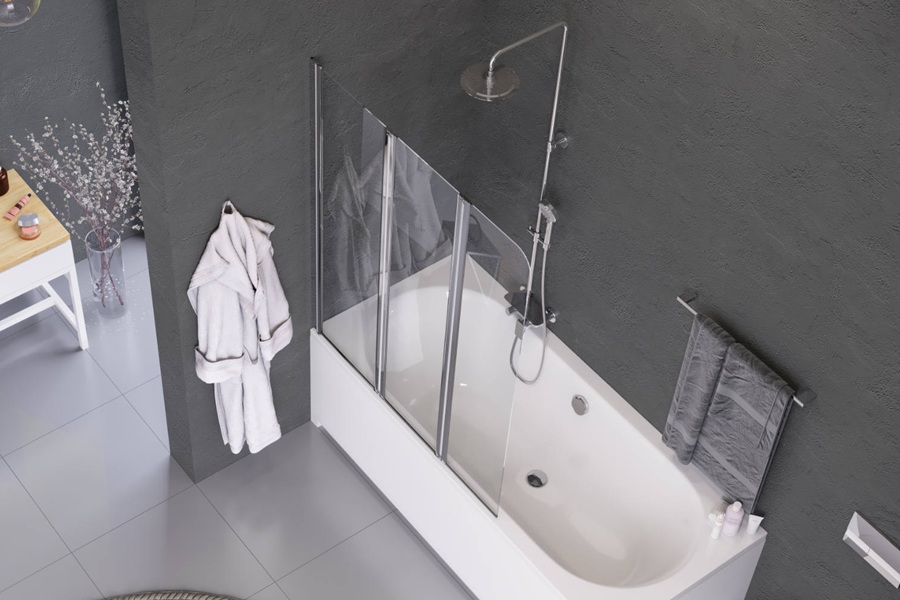
Almost everyone appreciates the chance to relax in a bathtub after a hard day at work, or to enjoy a warming bath after coming home in winter. On the other hand, nothing wakes you up quite like a quick morning shower. Choosing a bathtub with a screen means you don't have to give up either form of bathing. Let's look at the benefits and how to choose the right bath screen.
📌 Table of contents:
- 1. Benefits of bath screens
- 2. Types of bath screens
- 3. How to choose a bath screen?
- 4. Which bathtubs can a screen be fitted to?
- 5. Details that make a difference
📝 Summary:
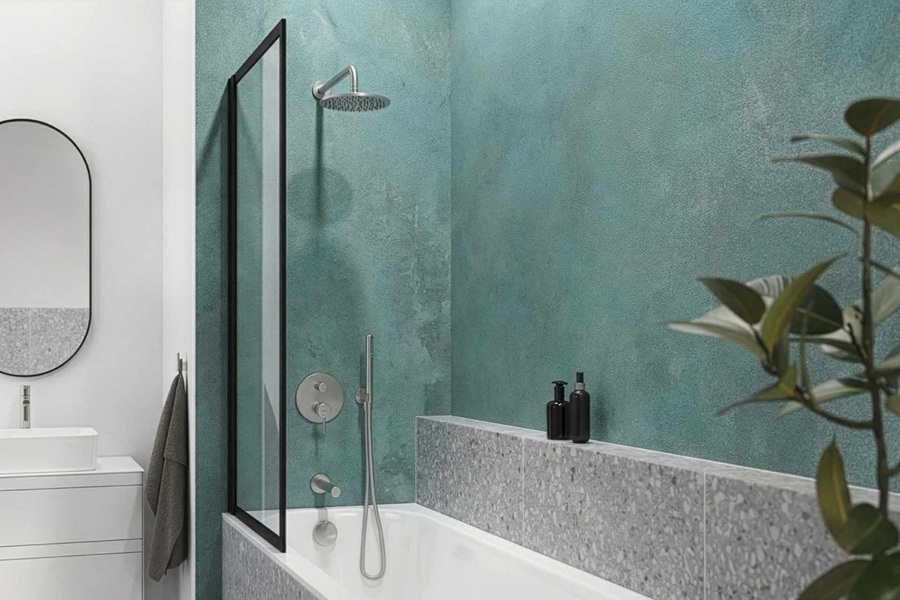
- A bath screen is a practical solution for anyone who wants both a bathtub and the option of a quick shower. Simply slide the screen across to use one option or the other, without splashing the bathroom.
- Excellent offers one-, two- and three-panel models (e.g. Liner, 900), available in chrome, matte black and gold finishes. The profiles are thin and light — a perfect fit for modern bathrooms, including loft-style and Scandinavian interiors.
- The screens are made of tempered glass (6 mm) and feature Clean Control (anti-limescale) and Double Safe Glass (impact-protection) coatings. Thanks to the sliding mechanism, they're easy to keep clean.
- Modern bath screens are also a design feature in a premium bathroom – discreet, elegant, without bulky doors. When folded, they don't take up any space. The Liner model stands out for its minimalist design and elegant line, even in smaller bathrooms.
Benefits of bath screens
The bath screen has become an effective successor to the shower curtains that used to be popular for fitting over a bathtub. It's not hard to see why — the benefits of this solution could fill a long list.
Above all, a bath screen is a great solution for a small bathroom, where saving space is an important consideration. If you want to enjoy the comfort of a bathtub together with the option of taking a shower, choosing a bathtub with a screen is the best way to go.
The basic function of a screen is to keep the space watertight and protect the floor from splashing while bathing. Bath screens stop water from splashing onto the bath mat, tiles or hidden corners of the bathroom, where moisture can encourage bacteria and mould to grow, or limescale and dirt to build up. A screen seems like an ideal solution when children use the bath unsupervised.
Bath screens are also easy on the wallet. Although it's worth investing in a high-quality screen with good technical specifications from the start, it's still a cheaper option than buying both a bathtub and a shower enclosure. Installing a shower enclosure should be done by a specialist. Otherwise you risk a range of problems related to incorrect levelling and assembly of its components. Installing a screen is considerably easier and cheaper, although here too it's worth entrusting the job to professionals.
A bathtub with a screen is a convenient set-up that makes relaxing easier. The screen's glass panel, which separates the bathing zone from the rest of the bathroom, keeps the water warmer for longer, traps water vapour and intensifies the scent of bath salts or scented candles. This simple solution lets you create your own home spa zone. For anyone wanting an even bigger dose of relaxation, we recommend the hydromassage and chromotherapy systems that Excellent has been making for more than 25 years.
A well-chosen screen is also a great solution visually. It separates the bath zone from the rest of the room. It gives users a sense of privacy while bathing, especially if you choose a matte glass finish. Finally, the shape of the screen, its size, finish and the colour of the mounting profiles all contribute to its visual appeal. A screen can become a genuinely striking decorative element in the bathroom.
Types of bath screens
Bath screens can be divided according to several criteria, such as the material they're made from, the mounting method, or their construction. The most popular screens on the market are made of tempered glass set in aluminium or steel profiles. These are more expensive than constructions with acrylic or polystyrene panels, but the numerous advantages of glass mean that most customers choose this type of product.
A tempered glass screen offers high impact resistance, and if it does break it will shatter safely into blunt fragments. Compared to plastic, glass is easier to keep clean, which is further helped by the hydrophobic, easy-clean coatings available on bath screens, such as Excellent's Clean Control. Screens made of plastic materials such as plexiglass are easier to scratch, whereas glass ones look excellent even after many years of use.
Depending on their construction, several types of screens can be distinguished
· Fixed – the simplest version of a screen, in which the glass panel is permanently mounted on the edge of the bath using a wall profile. The fixing is usually reinforced with a bracket connecting the screen to the wall. This is a rarely used solution with several limitations: the relatively short glass panel leaves a large part of the bath exposed, increasing the area where water can splash out during bathing; and the inability to move the screen limits how thoroughly you can clean the rim (edge) of the bath.
· Single-panel pivot screens – similar in form to fixed screens, but in this case the panel is movable, mounted on hinges in the wall profile. This means the screen can be opened either into the bath or outwards into the bathroom. The advantage of single-panel pivot bath screens is that the panel can be swung back against the wall through 180 degrees on its hinges, which makes it easier to keep the product clean. The drawback, on the other hand, is mainly that in very small bathrooms there may not be enough space to swing such a screen outwards.
· Two- or three-panel folding screens – the most popular type of screen, whose key feature is the ability to fold the panels, which — especially with three-panel screens (or those made up of even more panels) — allows a long screen to be closed into a compact form. Thanks to their large surface area, they effectively protect the floor from splashing while you shower. Because there are no runners connecting the glass panels, keeping a folding screen clean is convenient and hassle-free.
· Sliding screens – mounted using wall profiles, these screens rest on the rim of the bath on special runners. This allows the panels to slide apart, meaning a screen that is compact when closed can provide a large shower zone when opened. A watertight seal with the bath is provided by gaskets pressed down by the weight of the whole screen. This ensures that a correctly installed screen won't leak. Solutions of this type are elegant and work great in modern bathrooms. Their downside is the gap between the two panels, where dirt and other residue can collect. Excellent's Liner sliding screens, however, have this gap minimised to just 10 cm, and the manufacturer additionally includes a dedicated sponge with a handle for cleaning it.
How to choose a bath screen?
The choice of bath screen depends on several factors. The most important thing to consider when choosing a screen is matching its length to the size of your bathtub. How wide a bath screen should be is largely determined by the length of the alcove in which the bath will be placed. Screens are most commonly available in lengths between 70 and 140 cm and heights of 140-150 cm, and these are the most versatile for most bathrooms. It's generally accepted that the minimum width of space needed to comfortably step into the bath is 75 cm. This is especially important for screens that don't fold completely flat against the wall on hinges.
Another important consideration is choosing which side to mount it on. Some screens available on the market are universal, meaning they can be installed on the wall to the left or right of the bath. However, there are also screens which, due to their construction, come in separate "left" or "right" versions.
Bath screens aren't a solution used only in small bathrooms. Beyond their main function, a well-chosen screen can be an excellent decorative feature which, combined with the taps and bathroom accessories, helps define the style of the whole room. When a bathroom is sufficiently large, many people decide to create a home bathing lounge with room for both a bathtub and a shower enclosure. In that case, it's worth choosing a screen whose colours, profiles and handles will match the elements of the enclosure. For example, in modern, loft-style bathrooms it's worth using a wall-folding screen with a black profile from the Fabrika range, while for a glamour-style bathroom the ideal solution would be the two-panel sliding Liner screen in a glossy gold finish.
Check out bath screens
See nowWhich bathtubs can a screen be fitted to?
A bath screen is most often fitted to a rectangular corner bath. This is the basic type of bathtub, with relatively few restrictions on fitting a screen. The key thing above all is for the bath's rim to be flat. Installing the screen correctly will ensure a watertight seal between the glass panel or runners and the edge of the bath. You should also pay attention to the width of the bath – in narrow alcoves (e.g. 70 cm), some single-panel pivot screens may not have enough space to fold inward.
Will a bath screen work with a freestanding bathtub? In theory, screens are recommended for classic, rectangular built-in bathtubs. However, Excellent's range does include the popular freestanding, wall-mounted Lila 2.0 bathtubs, available in left- and right-hand versions. Modern bath screens will absolutely suit them. Below we present example combinations of Lila 2.0 freestanding bathtubs with the single-panel pivot Fabrika screen, and with the sliding, wall-folding Liner screen, available in three colour finishes: chrome, matte black and glossy gold.
Details that make a difference
When choosing a screen, we often settle on a specific model without paying attention to certain elements which, although not obvious at first glance, make the product satisfying to use for a long time. One of these details is lift-up hinges with a 180-degree range of motion. These mean that while folding the screen — for example when cleaning the bath — the bottom seal doesn't press against the edge, which makes folding and unfolding the screen even lighter and more convenient. For user comfort, all Excellent screens have a built-in hinge-lifting system.
How do you clean a bath screen? This is a question often asked by people who haven't previously had a shower enclosure or screen at home. In both cases — not only when the material used is glass panels — it's important to clean regularly. Limescale and residue from various bathing products are best removed as they appear, using a squeegee or a clean, soft cloth. Avoid cleaning products containing strong acids, alkalis, acetone, or anything that may contain abrasive particles. A significant help when cleaning bath screens and shower enclosures is the Clean Control coating that Excellent applies to its products. This is a nanocoating applied to the glass during production, thanks to which dirt doesn't stick to the surface as easily. Depending on the screen range, Clean Control is applied to the product on the inside only, or on both sides.
An interesting example of a bath screen is the Be Spot model available from Excellent. This screen is part of a bathroom product range of the same name, which also includes bathtubs and washbasins. This original concept allows for a bathtub with a shower in a small space. The practical, narrowed corner bathtub (available in left- and right-hand versions) fits perfectly into a smaller bathroom footprint while retaining a functional usable area in the room. Meanwhile, the widened section with a straight outer edge allows for the fitting of a single-panel screen made of curved tempered glass (total length including the profile is 750 mm).
The Fliper range of screens has another distinguishing feature: a special protective Double Safe Glass coating. Thanks to this, if the pane breaks, the glass doesn't shatter into small pieces but stays intact on the coating, similar to how car windscreens behave. An example of a controlled break of glass with the Double Safe Glass coating is available below.
🔽 Looking for inspiration?
📌 See ready-made bathroom arrangements with bath screens.
📞 Talk to an Excellent advisor – we'll help you choose the right model.
🛒 Visit our shop and check availability.